When you decide to get a tattoo, the first question is usually "What?" followed closely by "Where?". While scrolling through Pinterest or Instagram offers endless inspiration for imagery, it rarely teaches you about the most critical element of tattoo design: Placement.
The human body is not a flat sheet of paper. It is a three-dimensional, living canvas composed of curves, muscles, bones, and skin that stretches and twists. A design that looks perfect on a flat screen can look distorted or awkward when applied to a moving body part without consideration.
At our studio, we don't just "stamp" a design onto your skin. We design for your body. Understanding how anatomy influences tattoo placement is the secret to getting a piece that doesn't just sit on you, but looks like it belongs to you.
1. The Concept of "Flow" and Muscle Structure
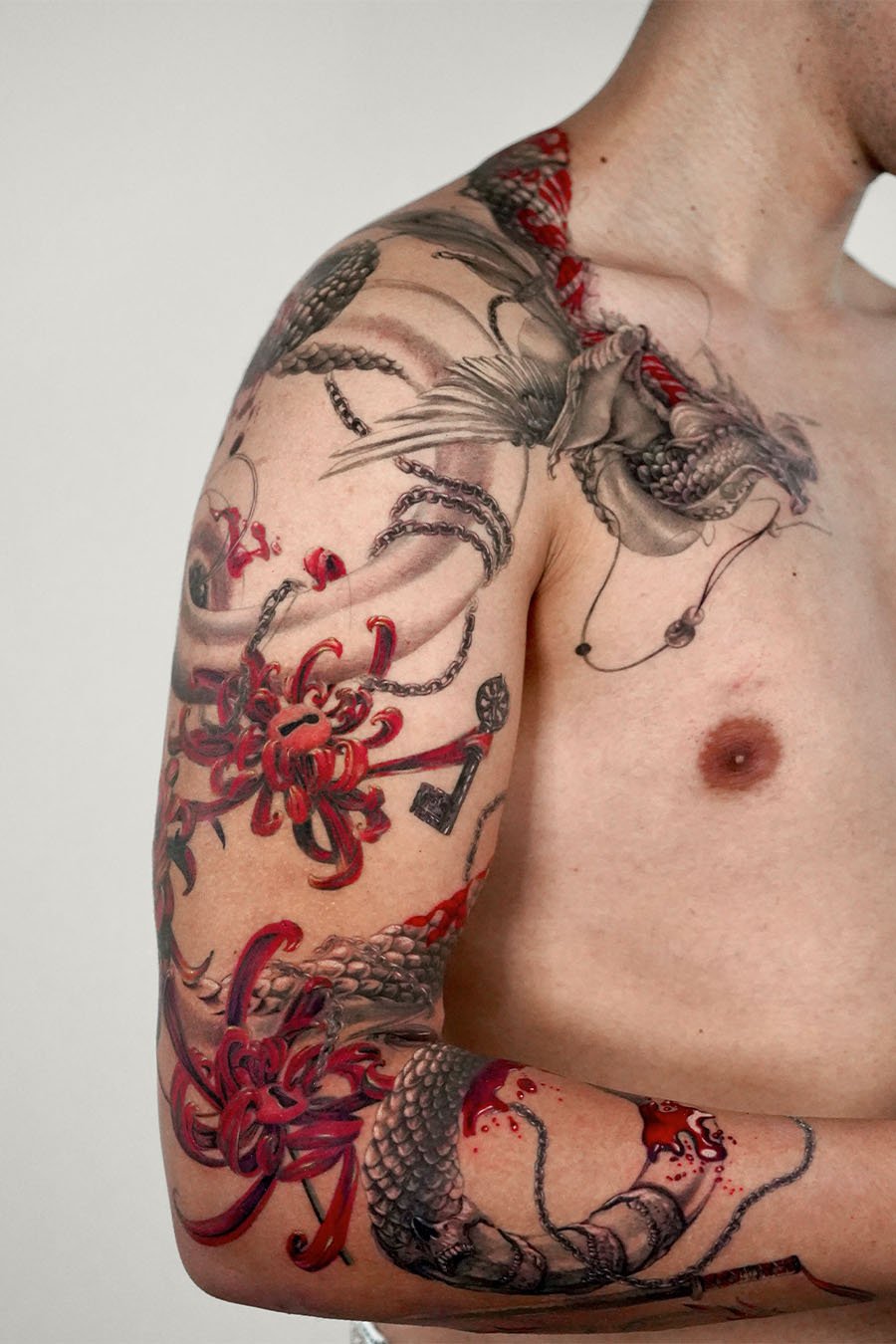
"Flow" is a term you will often hear our artists use. It refers to how a design follows the natural lines and musculature of the body. Every body part has a direction. The arms hang and twist; the torso has an "S" curve; the calves have a specific taper.
For a tattoo to be aesthetically pleasing, it needs to work with these directional lines, not fight against them.
The S-Curve: Think of a large floral piece on the hip or ribs. If the design is stiff and straight, it will look static and unnatural. However, if the artist designs the stems and leaves to mimic the natural curve of the waist and hip bone, the tattoo accentuates the body’s shape.
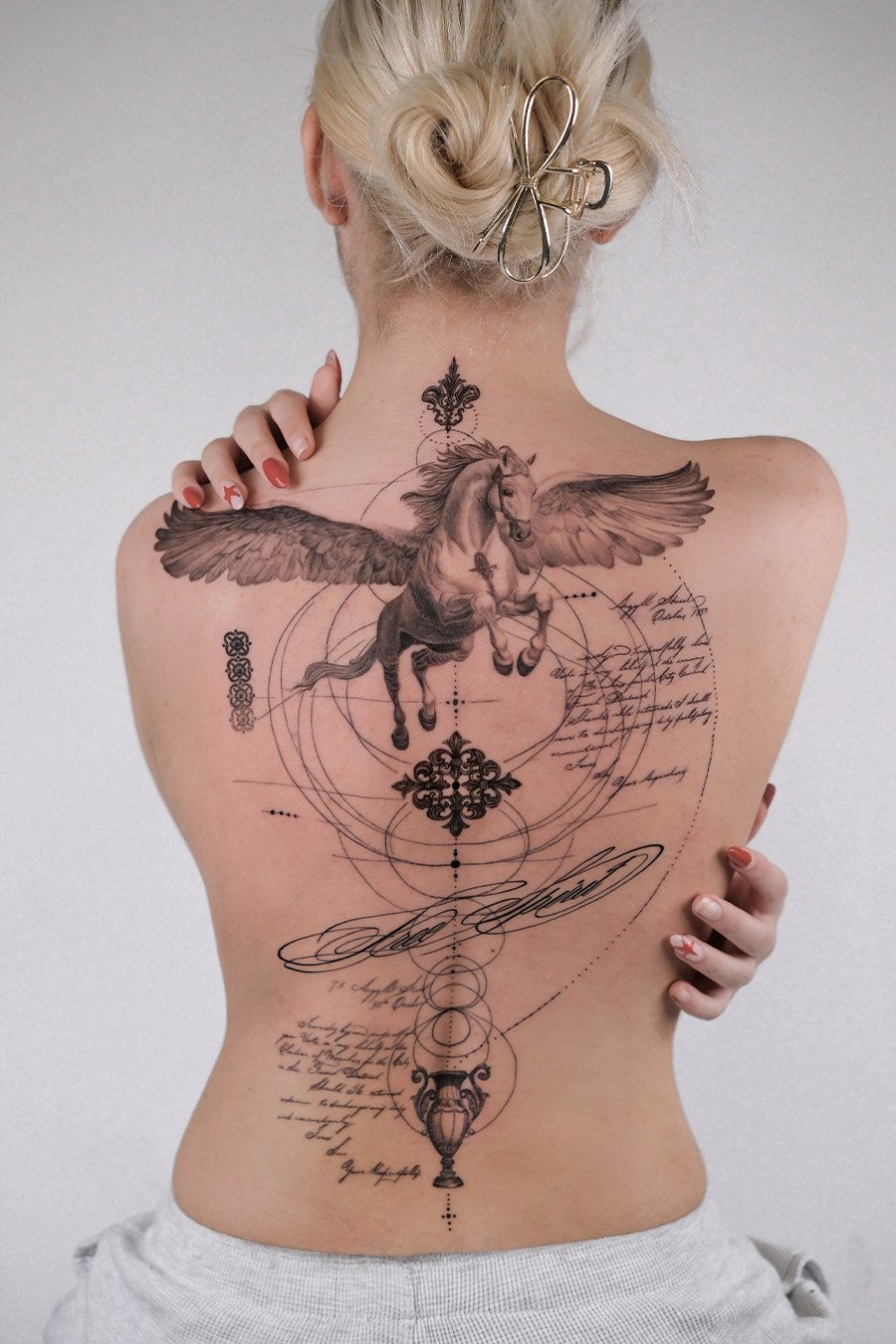
Muscle Groups: A skilled artist looks at your muscle definition. For example, a circular mandala design is often placed on the shoulder cap (deltoid) because the muscle itself is round. Placing a square design there often creates a visual conflict. Similarly, text or linear designs often look best running parallel to long muscles, like on the forearm or along the spine.
When a design ignores muscle structure, it can warp unpleasantly when you move. A straight line drawn on a relaxed arm might turn into a jagged wave when you flex or twist your wrist. This is why we ask you to move, stand, and sit during the stenciling process.
2. Enhancing the Form: Tattoos as Optical Illusions
Beyond just fitting, strategic placement can actually change the visual perception of your body. Tattoos can be used to contour, slim, or widen specific areas, acting almost like permanent makeup or tailored clothing.
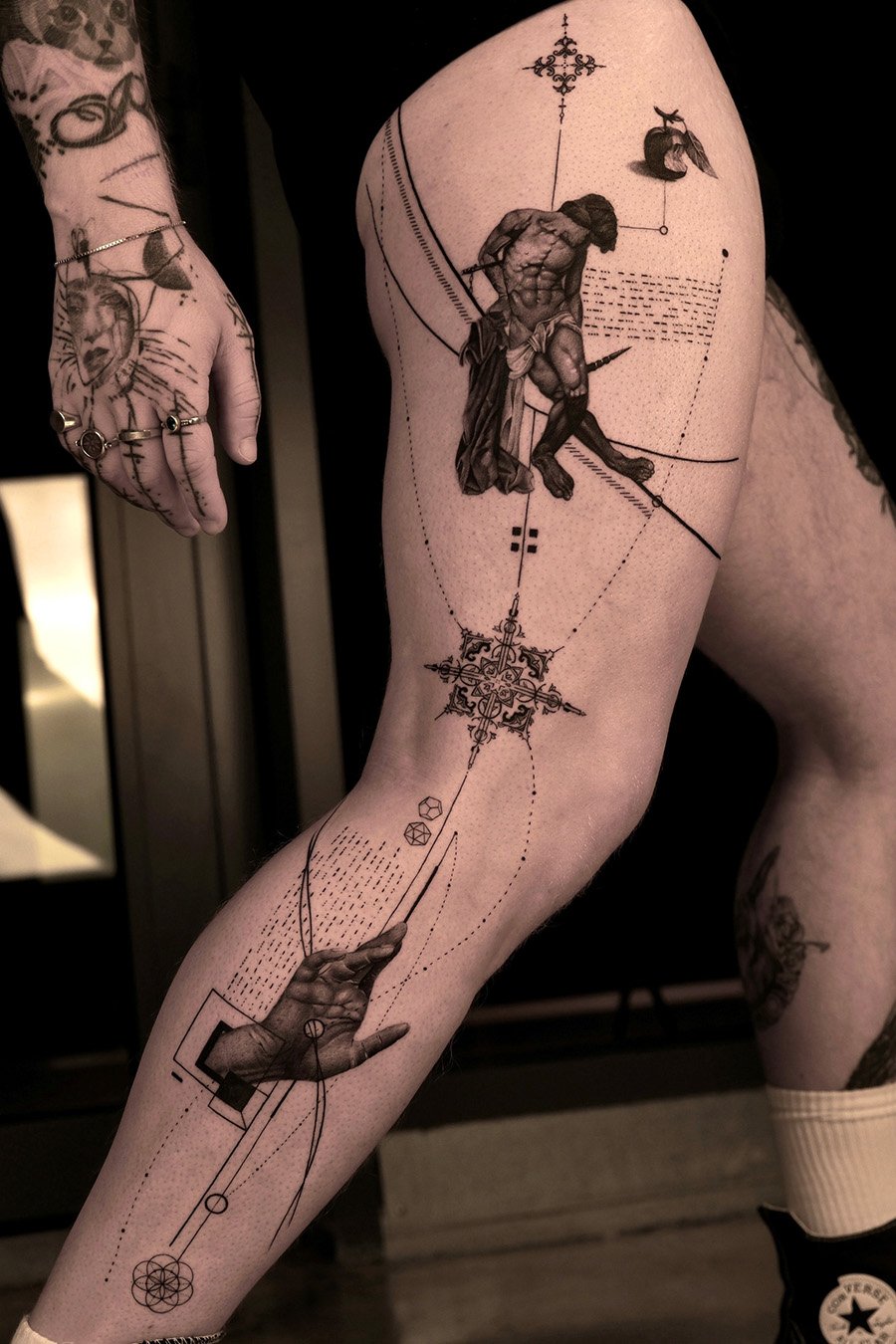
Elongation: Vertical designs placed along the spine, the sternum, or the side of the thigh draw the eye upward and downward, creating an illusion of length. This is a popular choice for fine-line scripts or long-stemmed botanical pieces.
Widening and Framing: Horizontal placements, such as "rockers" across the chest or a collarbone tattoo, emphasize the width of the shoulders. Symmetrical ornamental pieces under the chest (sternum) can frame the torso, creating a balanced, hourglass visual.
This is particularly important in ornamental and geometric styles, where symmetry and balance are key. An ornamental band around the arm needs to sit at the exact point where the muscle tapers to avoid making the arm look uneven. The goal is always to complement your anatomy, creating a seamless transition between skin and ink.
3. The Longevity Factor: Friction and Distortion
Anatomy doesn't just dictate how a tattoo looks today; it dictates how it will look in ten years. The skin is an organ that changes, and certain areas age differently than others.
High-Friction Areas: Places like the fingers, the sides of the feet, and the inner lip are constantly rubbing against clothing or other skin. The skin here regenerates faster, causing tattoos to fade or "blow out" (where lines become blurry) much quicker. A complex micro-realism portrait is usually a poor choice for a foot or a finger because the detail will be lost to friction over time.
High-Movement Areas: Areas like the elbows, knees, and armpits are subject to constant stretching. Heavy saturation or perfect geometric circles are difficult to maintain here because the skin texture is rougher and constantly expanding and contracting.
This is why your artist might suggest moving your design a few inches up or down. It’s not about changing your vision; it’s about ensuring your vision survives the test of time.
Your body is unique. A design that looks great on your friend might need to be resized or repositioned to suit your specific anatomy. Trust your artist when they pull out the stencil and start adjusting. We aren't just looking for a blank space; we are looking for the perfect home for your art.